Inside Sun Devil Rocketry: How ASU students design, build and launch rockets
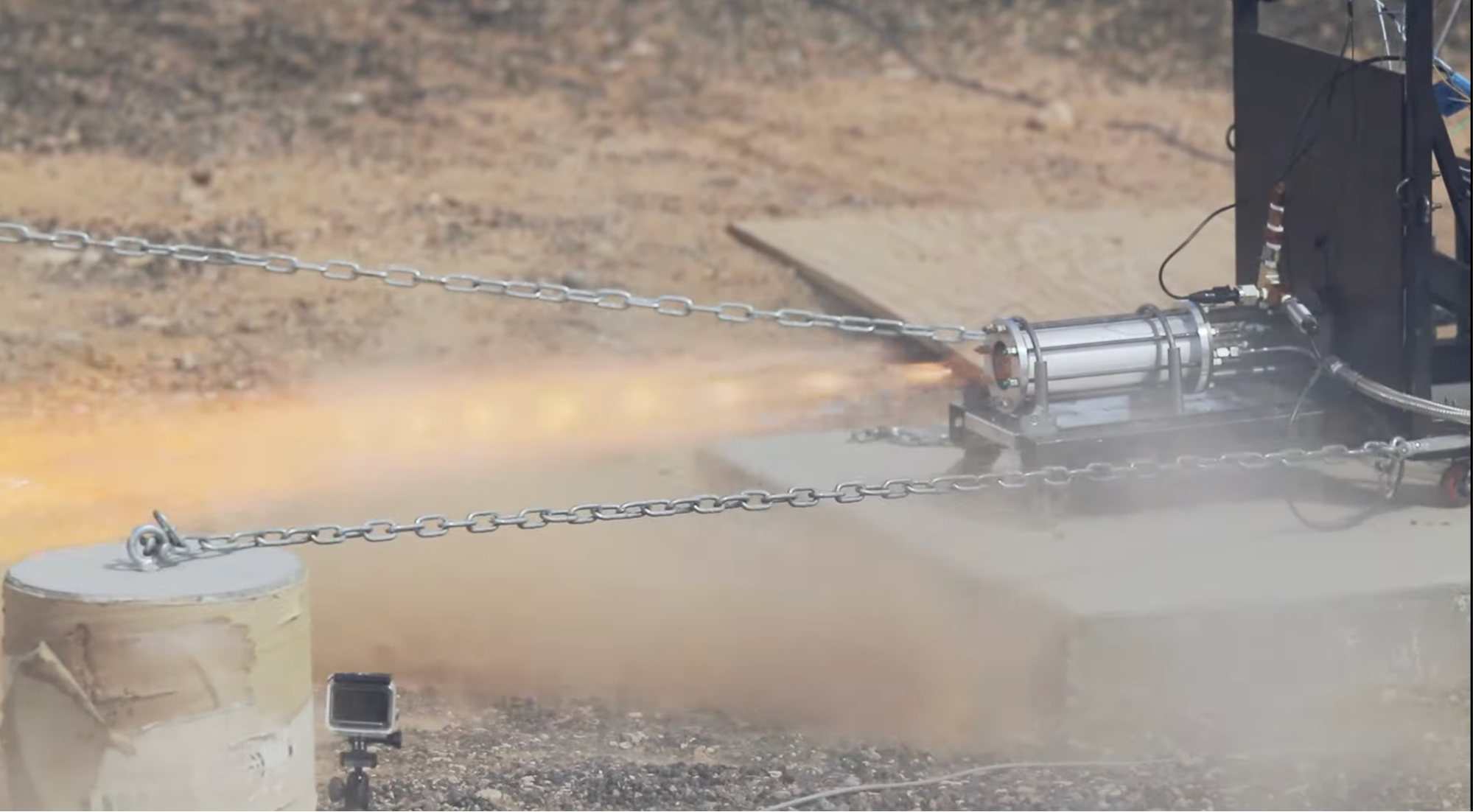
Members of Sun Devil Rocketry work towards building a liquid engine-powered rocket.
At Arizona State University, aerospace students are getting hands-on experience in designing, building and launching rockets through the Sun Devil Rocketry club.
Sun Devil Rocketry is a student organization focused on aerospace engineering and rocket development. The club is open to anyone, regardless of their engineering background, but it primarily attracts students from the School for Engineering of Matter, Transport and Energy, part of the Ira A. Fulton Schools of Engineering at ASU.
Students learn various aspects of rocket engineering, starting with the basics.
A launchpad for all skill levels
The club is divided into different subteams: Avionics, High-power rocketry and propulsion, which includes liquid and solid subteams, and the introduction teams.
“The intro teams are designed to help teach people project management, engineering basics and rocketry fundamentals in general,” says Aron Magnus, the club’s vice president and liquids team lead. “I started on an intro team, then moved into high power, and finally the liquids program. The intro teams help people decide what they want to focus on, and develop the skills to do it.”
The avionics team develops flight technology for the club in-house.
“Avionics supports all of our teams,” says Gabriella Erimli, the current club president, “They create flight computers, along with most of the hardware we use on our projects.”
Flight computers monitor the rocket during flight by collecting data such as GPS location, altitude, speed and acceleration. The data depicts the success or failure of the rocket launch, and can be used to improve future launches.
Through technical projects, the club supports academics, including helping upper-division students develop capstone projects based on their work in the club.
According to Magnus, the club recently tested a rocket engine as a Barrett thesis project for some of the club members.
“It was very successful, and they got great data from it,” he says.
Not only does the club support its members, but it also works to help the community.
Sun Devil Rocketry has an active outreach program, partnering with schools in the Phoenix area to teach engineering fundamentals to elementary school students.
“We start with a presentation about engineering in general, and then we build and launch cardboard rockets with the kids,” Erimli says. “It’s always fun seeing the kids get really excited.
With up to 100 active members, the club manages multiple projects in parallel. Each project starts with an idea, developed into a concept and pitched to the team.
Once approved, members begin a complex design process. Each rocket requires different specifications, but a few things remain the same.
Designing for liftoff
For the rocket to launch, the team needs to ensure an appropriate thrust-to-weight ratio. This ratio denotes the engine capability relative to the rocket’s weight. For Sun Devil Rocketry, the members follow a 7:1 ratio, ensuring the engine is able to generate seven times more force than the rocket’s weight.
“Initially, if we assume that the rocket will weigh about 100 pounds, we set the engine minimum to 700 pounds, and design our system around that specification,” Magnus says. “We decide our feed system, determine how the propellants interact with the engine, and if its fit seems unfeasible, we reiterate.”
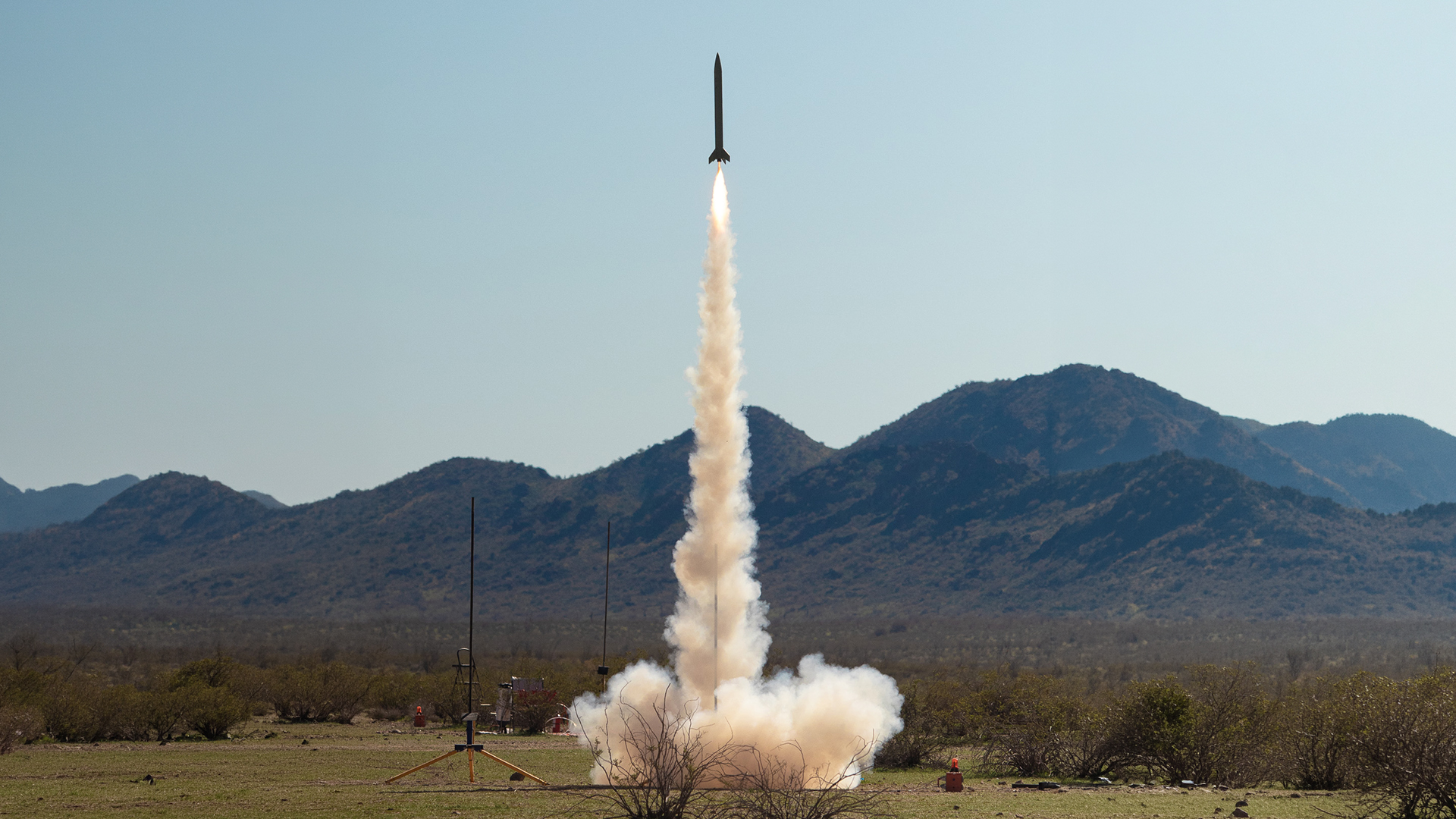
The club primarily launches out of Eagle Eye Launch Site, although liquids testing is performed on the ASU West Valley campus. The club is diligent in following all safety regulations to ensure no one gets hurt from a faulty launch.
“When designing, we base our ideas around safety,” says Michael Sullivan, advanced high power team lead and future club president. “We pick valves to handle extreme temperatures, and we follow all safety regulations required by the state we launch in.”
As for the construction of the rocket, the club uses both in-house and outside contractors.
“The goal is to expose students to designing for real manufacturing processes and helping us make as many materials as possible in-house,” says Sullivan.
Some things, however, require professional machining.
“We design specifications for parts like our liquid injector, but we send it to a machining service for construction,” Magnus says. “Then we can post-machine at the Chandler Innovation Center. There’s a mix of what we can do and what we need to outsource.”
As the club continues to grow, both new and old members look forward to continuing the development of existing projects, including a liquid rocket.
“I’m really looking forward to the liquid rocket that will hopefully get constructed next year,” Magnus says. “We’ve been working on it for five years now. It’ll be a great milestone for the liquids program.”
Written by Summer Martinez
Communications Assistant
School for Engineering of Matter, Transport and Energy
Arizona State University
Email: [email protected]